Subdued Micro-Expression Prompting, Three-Part Beat Structures, and Avatar Retargeting for AI Acting
Directing believable dramatic acting in AI video fails when using standard emotion adjectives, which trigger exaggerated weeping and aggressive gestures. By replacing emotional keywords with restrained micro-behavior cues, spacing reactions across extended takes with a three-part prompt architecture, and retargeting locked performances across multiple avatars, filmmakers can capture nuanced character performances without timeline distortions.

Top learnings
Replace overt emotion keywords with subdued physical micro-directions to stop diffusion models from rendering melodramatic facial contortions.
Structure long-take prompts into context, beats, and prompt segments with extended pauses so digital actors have space to absorb dialogue.
Decouple approved physical staging from casting by retargeting performances to secondary avatars in 720p draft passes before running high-definition renders.
Why do standard emotional adjectives trigger melodramatic acting in diffusion models?
When directors attempt to elicit nuanced acting from video diffusion models by using conventional emotional vocabulary, the generated performance frequently collapses into extreme parody. Words intended to convey quiet vulnerability are interpreted with literal, unrestrained intensity by neural rendering engines.
In a commercial spec ad workflow using Seedance 2.5, the creator behind InVideo's production breakdown demonstrates that words like sad cause digital actors to break into hysterical weeping. Prompting wet eyes results in heavy, unnatural tears streaming down faces, while describing a character moving near prompts the subject to reach out and physically clutch the scene partner. The underlying video diffusion engine amplifies visual tokens to their absolute aesthetic ceiling when unconstrained.
To bypass this generative overreaction, the creator replaces emotional labels with suppressed physical instructions. Prompts specify delivery terms such as halfvoiced or conceptual directions like smile without smiling, paired with explicit negative constraints such as do not let this become a scene. ReelStack suggests framing dramatic instructions entirely as physical micro-behaviors—such as tightening eyelids or swallowing before speaking—rather than naming internal psychological states.
 FRMWRKD-EXPLAINED
Read source excerpts 2
breathing anymore. And then we have to be very careful about emotional big words. So if we write sad, they are already like way too sad. If we write like near, so for example,
FRMWRKD-EXPLAINED
Smile without smiling. If you would talk with an actor and you want the actor to smile from within without showing it, it's like then in the eyes in the context of the scene.
FRMWRKD-EXPLAINED
How does temporal breathing room and structured beat prompting stabilize long-take performances?
Compressing multiple dramatic beats into brief four-second generations eliminates the physical silence required for authentic acting. When an actor must speak, register a revelation, and react within a tiny generation window, visual diffusion blends the actions into chaotic facial spasms.
The creator demonstrates that believable dramatic acting requires extending takes up to 30 seconds, deliberately inserting eight-second intervals where no dialogue occurs and characters merely absorb a line. In a dramatic dialogue exchange inside a car, the generation prompt isolates moments where one actor delivers a difficult line without looking over, while the adjacent character simply reaches down to switch off the stereo. Providing physical room allows the model to render believable micro-reactions instead of constant mouth movement.
To keep agentic generation tools aligned across these extended takes, the creator codifies prompt architecture into three distinct layers: Context, Beats, and Prompt Segments. The Context establishes fixed rules and character backstories, Beats track narrative and emotional progress, and Prompt Segments define shot-specific mechanical staging. Organizing generations into this tripartite framework prevents orchestrating language models from drifting into generic visual prose during production iterations.
FRMWRKD-EXPLAINED Read source excerpts 2
this is basically in a nutshell what it should do. So here very important to divide it into three sections. Context, beats, and prompt segments. Again, this is just because
FRMWRKD-EXPLAINED
part of that. And this is what I meant with the moments in between. And even if we are not using every bit of it, when we look here, it's eight seconds. We just see reactions.
FRMWRKD-EXPLAINED
How can filmmakers retarget an approved performance across multiple actor avatars?
Locking down a successful take with natural eyelines, pacing, and camera motion requires substantial compute investment. Re-rendering an entire sequence from scratch simply to test an alternate cast demographic or target a different audience segment introduces unpredictable generative variance.
Creator Diego Galvao illustrates in Higgsfield Marketing Studio that filmmakers can separate the underlying physical performance from the actor's visual identity. Using the platform's Ad Multiplier tool, the filmmaker inputs a master 15-second generation that features locked camera movement, staging, and vocal timing, then selects an alternate digital avatar from an AI influencer library to replace the original talent while retaining the exact motion track and cadence.
To prevent excessive credit consumption during demographic retargeting, Galvao downgrades output resolution from high-definition tiers to 720p draft renders, which drops generation overhead from 256 credits down to 112 credits. ReelStack suggests standardizing this retargeting approach for commercial campaigns: direct and approve a single master motion plate using a neutral actor proxy, then run batched 720p avatar swaps to audit casting options before committing to final high-resolution deliverables.
 Diego Galvao
Read source excerpts 2
this guy, we're going to use the same video, the same movements, everything the same, but replace him with somebody that's more relatable to another shopper. So, here we go.
Diego Galvao
is. 720. All right, 112. For this sample, 720p is pretty good. I'm not going to change anything, but you can use the change hook to change what he says. I want to leave
Diego Galvao
What operational breakdowns and wardrobe hallucinations limit automated performance pipelines?
While automated avatar replacement and agent-driven video suites accelerate scene assembly, integrating third-party models introduces opaque controls and mechanical generation errors that require strict human oversight.
In agentic production suites, platform abstraction layers frequently strip away direct model controls. In InVideo, the creator observes that granular provider selections are hidden behind generic Lite, Pro, and Ultra tiers, preventing directors from selecting specific diffusion model checkpoints or adjusting latent sampling parameters directly. Filmmakers must rely on internal agent routing rather than tailoring model selection to specific visual styles.
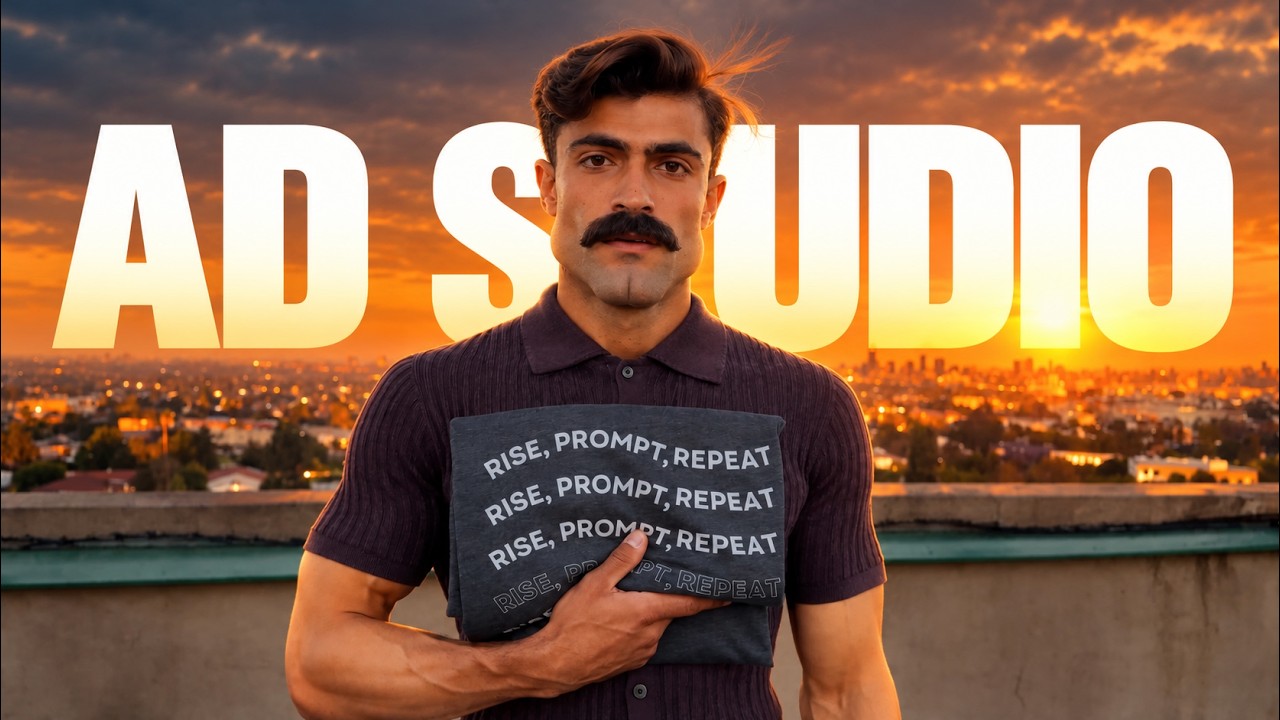
Furthermore, automated wardrobe integration frequently fails during motion synthesis. In Diego Galvao's try-on tests, generating a landscape commercial take caused the diffusion model to completely fail to bind the hero t-shirt to the actor, rendering the subject without the designated product while running out of time for a re-roll. Additionally, avatar replacement can cause anatomical drift: swapping the talent altered the character's physical build, generating an overly muscular physique that clashed with the reference avatar's proportions. Filmmakers must verify product binding and silhouette accuracy on low-cost drafts before deploying automated avatar multipliers.
Read source excerpts 2
a name. And let's just name it test. And there is already the first thing you notice here, and this is that you do not have the option what provider. you only have those
FRMWRKD-EXPLAINED
below my pay grade. Links in bio. >> They made this guy fit now, right? Cuz the the avatar wasn't as fit as he shows over here. Now, with the second one, because I don't
Diego Galvao
Key moments to explore
Optional deep divesWant to see a technique in action? Jump into the source videos. These AI-extracted timestamps may be approximate.
- 01:40 ↗Testing character acting and emotional depth served as the foundational premise of the spec ad project rather than focusing strictly on the vehicle.FRMWRKD-EXPLAINED · How I Made a Lamborghini Commercial with AI (Full Workflow)
- 01:28 ↗Higgsfield Ad Studio splits functionality between static ad creation, ad multiplication, and video ad generation via Marketing Studio.Diego Galvao · Can AI Generate All Marketing Images and Videos in Under 30 Minutes? Higgsfield Ad Studio Tutorial
- 04:19 ↗Crafting the brand slogan was accomplished by collaborating with Claude to analyze conceptual contrast formulas used by major brands like Under Armour and Rimowa.FRMWRKD-EXPLAINED · How I Made a Lamborghini Commercial with AI (Full Workflow)
- 02:04 ↗Video ads can be generated from uploaded product stills using preset styles like 'try on', custom environment settings, specified aspect ratios (16:9 or 9:16), and custom AI avatars.Diego Galvao · Can AI Generate All Marketing Images and Videos in Under 30 Minutes? Higgsfield Ad Studio Tutorial
Put it into practice
Write a production brief with clear approval checks →Practical steps and checks before committing to production. Get the practical weekly briefing →The useful ideas in one email. Subscribe to keep learning. Need a filmmaker for your project? →Tell us what you want to make and submit a project brief.Go to the source
2 videos